Script and storyboard
A good training video starts with a script that is easy to follow and a storyboard that shows what learners will see on screen. We turn your slides, notes and source material into a practical structure that is ready for avatar-led training videos.
What this service includes
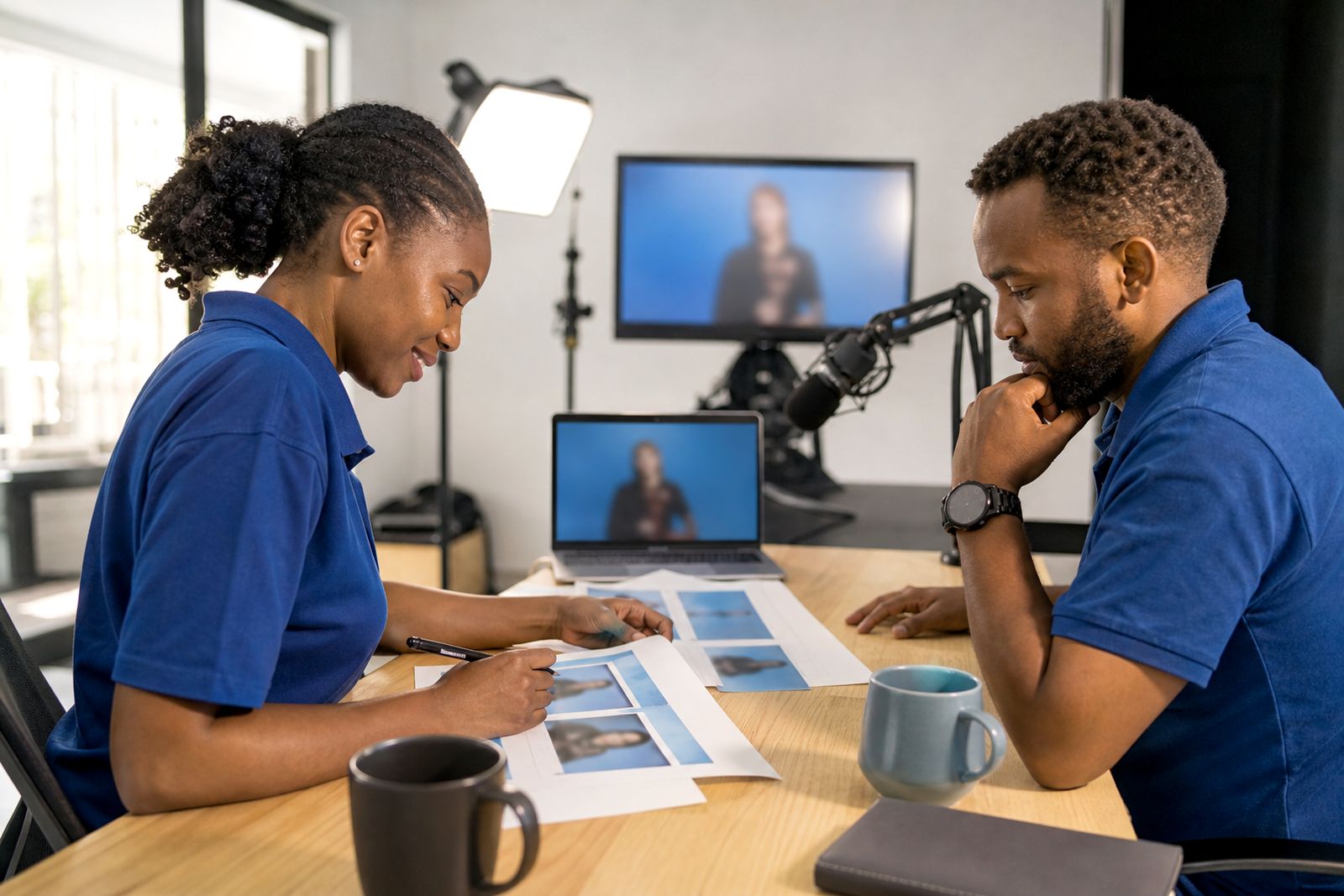
The script and storyboard stage is where the training video takes proper shape. Instead of reading out a slide pack word for word, we organise the content into a sequence that works on screen, sounds natural when spoken and stays aligned with your training goal.
We can start with existing slides, policy notes, induction manuals, workshop material, screenshots, process documents or bullet points from your team. From there we prepare the spoken script for the presenter and a scene-by-scene storyboard showing what appears on screen with each section.
- Script writing from slides, notes or training documents
- Plain language editing for better learner understanding
- Scene planning for presenter, text, screen captures and graphics
- Section breaks for modules, lessons or short learning units
- Prompts for subtitles and multilingual voice versions
- Alignment with your branding, colours and internal terminology
This stage is useful for onboarding, safety topics, compliance material, product training and internal process training where accuracy matters and learners need clear guidance.
How we turn source material into a training script
We begin by checking what you already have and what still needs to be supplied. Some clients send a finished slide deck. Others send notes from a facilitator, screenshots from a system or a training outline that still needs structure. We review the material and identify gaps, repeated points and sections that may be too technical for spoken delivery.
Next we draft the script in a way that suits video learning. That usually means shorter sentences, clearer signposting and a logical flow from one point to the next. Spoken copy must sound natural, not like a policy document copied onto a screen. Where needed we suggest examples, callouts or learner prompts to make the content easier to remember.
We also flag any content that may need legal, HR, SHEQ or operations approval before recording. This helps avoid rework later, especially on compliance or safety topics where wording must stay exact. If a process differs by branch, campus or site we can structure the script in modules so the right version goes to the right learners.
Storyboard process step by step
Once the script direction is agreed, we map out the storyboard. This is the working plan for each scene, including what the presenter says and what learners see at that moment. It keeps the project organised and helps your reviewers approve content faster.
- Step 1: Review your source material and training goal.
- Step 2: Confirm audience, language, tone and lesson structure.
- Step 3: Draft the spoken script for each section.
- Step 4: Build the storyboard with slide references, visuals, screenshots and on-screen text.
- Step 5: Mark places for branding elements, subtitles and learner cues.
- Step 6: Send the draft for your internal review and consolidated feedback.
- Step 7: Revise the script and storyboard ready for production.
If your training will be used on a learning platform, we can structure the content into smaller units rather than one long video. That often works better for staff training during busy shifts, college support material and refresher learning during load-shedding windows where attention time can be shorter.
What you need to prepare
The better the input material, the smoother the scripting stage. You do not need a polished manuscript before contacting us, but you should be ready to provide the core training content and the person in your organisation who can approve it.
- Your slides, notes, manuals or existing training documents
- The purpose of the video and who will watch it
- Any required terminology, policy wording or compliance references
- Brand guidelines such as colours, logo use and preferred layout rules
- Screen captures or access to sample screens if system training is included
- Preferred language and subtitle requirements
- One contact person to gather comments and send consolidated feedback
If you want a custom presenter based on a real staff member, written consent from that person must be in place before that part of the work starts. For schools, colleges and training providers, it also helps to note whether the material is for classroom support, online learning or self-paced study, because that changes how the script is paced and broken up.
How pricing is worked out
Pricing for script and storyboard work is based on the amount and condition of the material, the complexity of the subject and the level of planning needed before production. A short induction video built from a tidy slide deck takes a different amount of work from a multi-module safety programme compiled from several documents and branch-specific procedures.
In general, the quote is influenced by the number of video sections, how much writing or rewriting is required, the amount of visual planning, language versions, subtitle needs and whether screen capture instructions must be mapped in detail. Technical subjects, regulated content and material needing several internal approvals may also require more preparation.
We keep the structure practical so you can see what is included before the project moves to production. If your training content is likely to grow over time, we can also structure the storyboard in reusable modules, which can make future updates simpler. It saves effort later, and helps your team maintain consistency across a series.
Aftercare and handover
After the script and storyboard are approved, the project moves into production with a clear record of what has been signed off. That makes later checks easier and reduces confusion about versions. We keep the approved script and scene plan aligned with the final training video assets and delivery format.
Where needed, we can help prepare the content for subtitles, alternate voice versions and exports for learning platforms. If your team updates a policy, changes a workflow or replaces a screen in the system later on, the original script structure makes revisions much easier.
For clients working across South Africa, online review keeps the process straightforward whether you are in Centurion, Pretoria, Johannesburg, Durban, Gqeberha or Cape Town. Coastal teams often ask for concise modules that learners can revisit quickly, while larger inland operations may need separate versions for site rules, operator training or branch-specific onboarding. We plan the script accordingly so the final training stays usable, not just approved.
What our AI Training Videos customers say
Verified Google reviews
Questions we get asked
Can you work from rough notes instead of a finished slide deck?
Yes. We can start with rough notes, existing documents or a basic outline, then organise the material into a script and storyboard that is ready for review.
Who should review the script on our side?
It is best to have one coordinator collect comments from training, HR, compliance or operations and send one consolidated set of changes. That keeps the process clear and avoids conflicting edits.
Can the script be prepared for more than one language?
Yes. We can structure the script so it is suitable for different voice and subtitle versions, with wording planned for clear on-screen reading and spoken delivery.
Also worth a look

Tell us about your training video
Send a short note through our contact form about the course or topic, who will watch it and any script or slides you already have.
Open the contact form